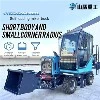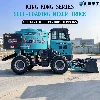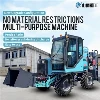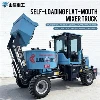
A four-wheel-drive (4WD) rough-terrain forklift is a vehicle designed for operation on complex terrain, combining the cargo-handling capabilities of a standard forklift with the off-road mobility of an off-road vehicle.
Typically equipped with high-power engines, heavy-duty chassis, and specially designed tires, these forklifts can operate stably on unpaved surfaces such as mud, sand, and slopes. Key features include: 1. **4WD System:** Power distribution via a transfer case ensures synchronized four-wheel drive, enhancing the ability to navigate difficult terrain; 2. **High Ground Clearance:** Usually 300mm or greater, preventing chassis scraping; 3. **Anti-slip Tires:** Deep-tread or solid tire designs for superior traction; 4. **Reinforced Suspension:** Uses hydro-pneumatic suspension or leaf springs to handle rough, uneven surfaces. Primary applications include mines, construction sites, and ports-environments requiring both material handling and off-road capability. Technical specifications typically include a rated load capacity of 1–5 tons and a gradeability of up to 30°; some models feature articulated steering for increased maneuverability. When selecting a model, it is important to consider operational conditions; for instance, humid environments may require anti-rust coatings, while high-altitude areas may necessitate adjustments to the engine's air intake system.