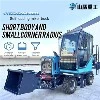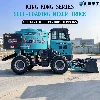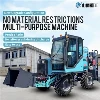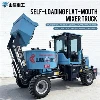
Concrete mixer trucks play a vital role in construction projects; among them, small mixer trucks are favored for small-scale projects due to their agility and efficiency.
1. Power and Loading Capacity
Small mixer trucks typically feature diesel engines with power outputs ranging from 50 to 100 horsepower, meeting the demands of navigating urban roads and confined job sites. With a loading capacity generally between 2 and 5 cubic meters, they are better suited for small-scale operations-such as rural road paving or minor construction projects-than their larger counterparts; they ensure transport efficiency without causing traffic obstructions due to excessive size.
2. Ease of Operation and Maintenance
These trucks are relatively simple to operate; while the cabin is compact, it features a logical layout equipped with standard instrument panels and controls. Regarding routine maintenance, engine service intervals are comparable to those of passenger vehicles, and spare parts are affordable, allowing users to easily replace wear-and-tear items themselves. Some brands offer after-sales service networks that provide timely maintenance support, thereby reducing the risk of downtime.
3. Mixing and Transport Stability
The mixing drums of small mixer trucks generally rotate at speeds of 4 to 8 revolutions per minute-adjustable based on requirements-to ensure the concrete remains evenly mixed and prevents premature setting during transport. Some models utilize hydraulic motors to drive the mixing system, maintaining agitation while the vehicle is in motion and reversing the drum direction to discharge the concrete. It is worth noting that, due to their lighter curb weight, these trucks place greater demands on road surfaces when fully loaded; therefore, operation on paved roads is recommended.