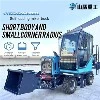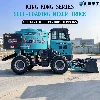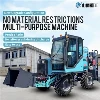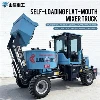
The 4WD rough-terrain forklift is a material handling vehicle specifically designed for uneven surfaces. By combining a four-wheel-drive system with a reinforced chassis structure, it overcomes the issues of wheel slippage and poor mobility that traditional forklifts face in environments such as mud, gravel, and steep slopes. Its core advantages lie in flexible power distribution and terrain adaptability, making it suitable for high-mobility operations in settings like mountainous construction projects, port logistics, and building sites.
Regarding the powertrain, these forklifts typically utilize diesel engines paired with part-time or full-time 4WD technology, allowing for the automatic adjustment of power output between the front and rear axles based on ground resistance. For instance, when driving on soft ground, the system directs more power to the wheels with better traction to prevent individual drive wheels from spinning; conversely, during hill climbing or heavy-load operations, simultaneous power delivery to all four wheels significantly boosts traction. This dynamic adjustment capability enables a rated load capacity exceeding 5 tons while maintaining stable operational performance.
In terms of structural design, rough-terrain forklifts feature an extended wheelbase, increased ground clearance (often exceeding 300mm), and a high-strength carbon steel frame, all of which enhance torsional rigidity and off-road mobility. They are typically equipped with deep-tread off-road tires that are 20%–30% wider than those on standard forklifts, further improving grip on gravel and muddy surfaces. Additionally, some models offer adjustable fork heights (reaching up to 14 meters) and 360-degree rotation capabilities; these features accommodate various stacking requirements while minimizing the impact of site constraints on operational efficiency.