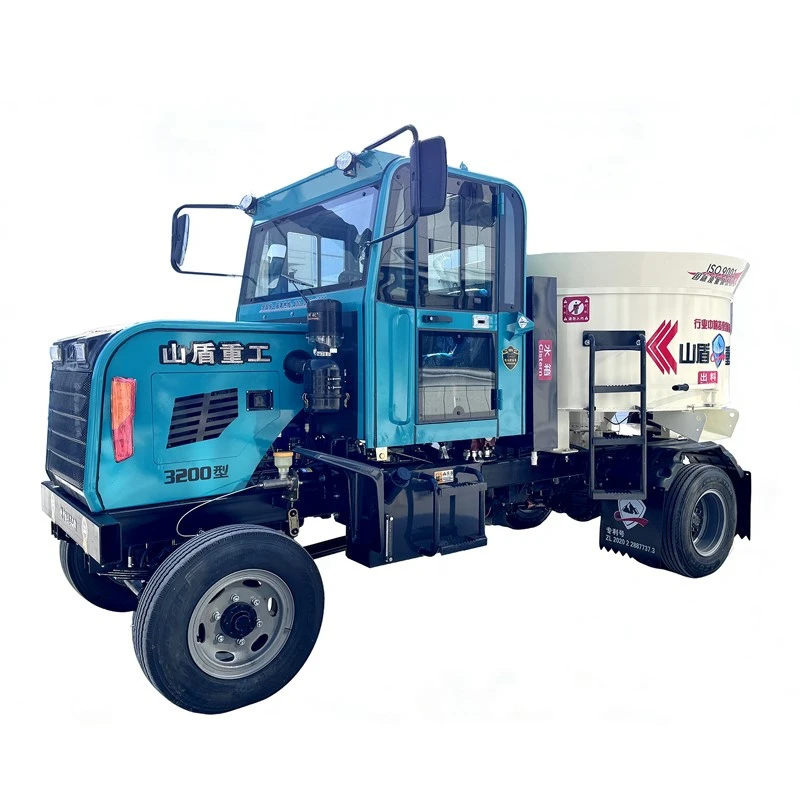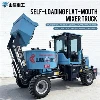
In construction projects, crawler-type mixer trucks have become the ideal choice for challenging environments-such as mountainous areas and muddy terrain-thanks to their superior off-road capabilities and adaptability to complex landscapes. With a wide array of models available on the market, how do you choose the right equipment? This article offers practical purchasing advice based on three key factors: core specifications, operational suitability, and cost control.
Defining Core Specifications: Load Capacity and Power Are Fundamental
1. Load Capacity: Select based on transport requirements. Models with a 10–12 cubic meter capacity are suitable for short-distance transport, while 14–16 cubic meter models are recommended for long-distance, heavy-load operations. Distinguish clearly between "gross vehicle weight" and "effective payload"; the latter must account for the vehicle's own weight (note that crawler vehicles typically weigh 2–3 tons more than wheeled counterparts).
2. Mixing Drum Configuration: Prioritize forced-mixing drums featuring blade thicknesses of ≥8mm and wear-resistant lining thicknesses of ≥5mm to ensure uniform concrete mixing and a long service life. The drum opening should utilize a double-seal design to prevent slurry leakage.
3. Power System: A diesel engine with at least 150 horsepower and a displacement of 4–6 liters is recommended. The hydraulic system should incorporate pumps and valves from reputable international brands-such as Rexroth or Sauer-to ensure stability during mixing and transport operations.
Scenario Adaptation: Terrain Determines Equipment Type
1. Mountainous or muddy terrain: Select models with a large track contact area and a ground pressure of ≤20 kPa (e.g., triangular or wide track designs) and a ground clearance of ≥40 cm to prevent bottoming out. A hybrid "tracked-wheeled" chassis is recommended, allowing for mode switching in extreme terrain.
2. Narrow work sites: Prioritize models with a short wheelbase (≤4.5 m) and a tight turning radius; the discharge chute should offer a rotation angle of ≥270° to facilitate unloading in confined spaces.
3. Slippery surfaces: Equip with a dual-safety setup comprising differential locks and snow chains; some high-end models feature built-in GPS positioning and tire pressure monitoring systems to provide real-time alerts regarding slippage risks.