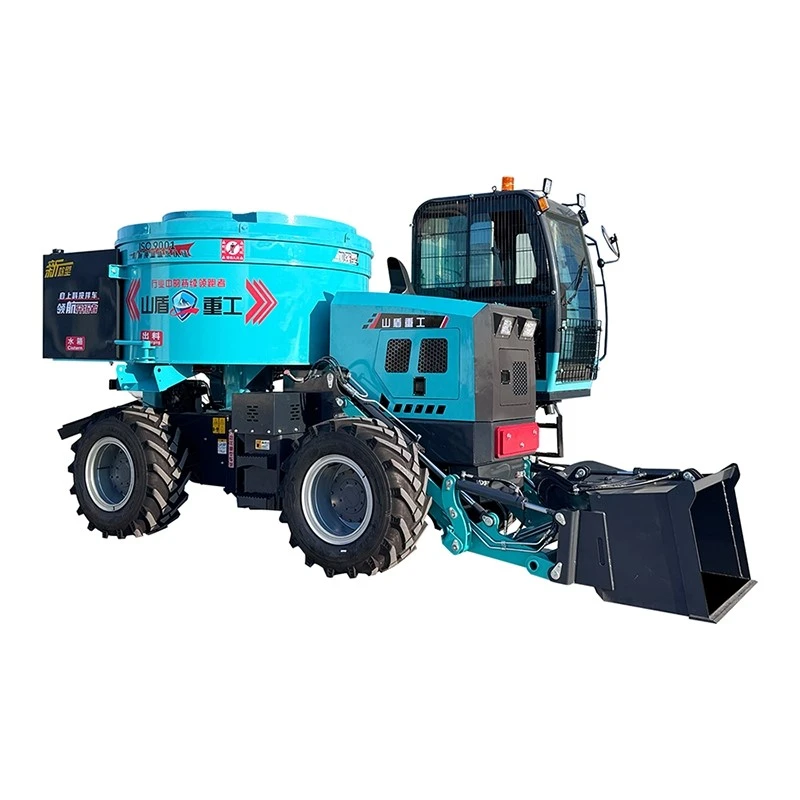
The technical characteristics of 4WD rough-terrain forklifts are primarily evident in their powertrain configuration. Unlike traditional 2WD models, 4WD versions utilize a transfer case or center differential to distribute power evenly between the front and rear axles, ensuring that every wheel receives effective torque. This design is particularly crucial for the environments common in Qingdao, such as port terminals, coastal sandy areas, and muddy construction sites during the rainy season. Furthermore, these forklifts are typically equipped with large-diameter, deep-tread tires; the deep grooves effectively shed mud and enhance traction. Some models also feature suspension systems with adjustable ground clearance to adapt to the uneven terrain of various work surfaces.
Electric 4WD rough-terrain forklifts are increasingly becoming a new choice for operations in mountainous areas. Compared to internal combustion models, electric versions offer lower noise levels and zero emissions, making them better suited for indoor use or in warehouses and food processing facilities with strict environmental standards. However, due to limitations regarding battery range and charging infrastructure, electric rough-terrain forklifts are currently primarily used for short-distance, high-frequency transport tasks. In the future, advancements in fast-charging technology and battery energy density will further enhance their adaptability to complex terrains. Overall, the specialized and intelligent management of 4WD rough-terrain forklift fleets will effectively improve logistics efficiency and operational safety under the complex working conditions found in the Qingdao region.